Key takeaways
Fill, sign, and submit FedEx Signature Release Authorization and Indemnification from any browser — or have AI generate a custom version in seconds. No installs, no printing, no back-and-forth.
- The Signature Release Authorization and Indemnification Agreement permits FedEx to deliver packages to a specified location without a recipient signature.
- This agreement requires signatures from both the recipient and a FedEx Station Manager to become binding.
- Recipients signing this form indemnify FedEx against claims arising from the loss or damage of packages delivered under these terms.
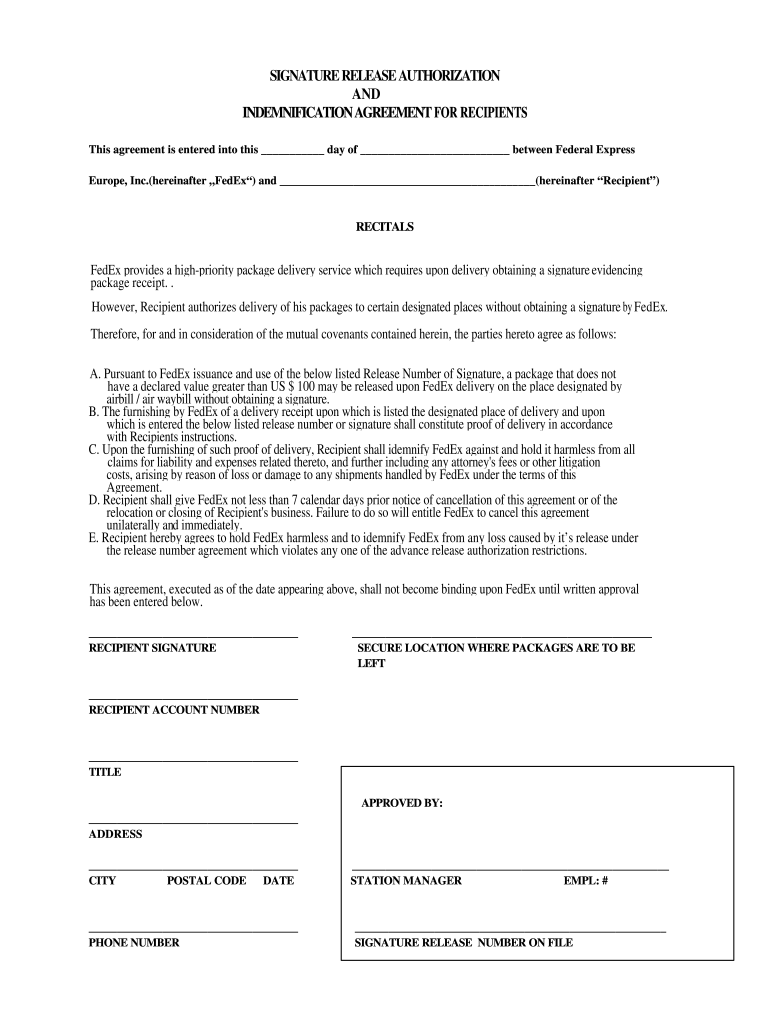
- The form requires the recipient's account number and a detailed description of the secure location where packages should be left.
- Authorization is not immediate and only becomes effective upon receipt of written approval from FedEx.
- The document features checkboxes and blank fields for providing additional information related to the recipient's delivery preferences.
What is FedEx Signature Release Authorization and Indemnification?
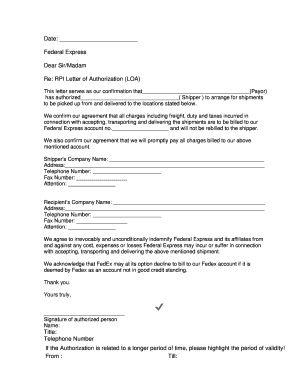
The Signature Release Authorization and Indemnification Agreement is a formal document used to permit FedEx to leave packages at a specific location without obtaining a recipient's signature. This agreement is primarily intended for individuals or businesses that prefer deliveries to be completed even when no one is available to receive them in person. By signing this document, the recipient authorizes the delivery service to drop off items at a designated secure spot, such as a porch or a back door, as specified in the form.
This signature release authorization agreement also serves as a legal waiver where the recipient agrees to indemnify the carrier against any claims arising from the loss or damage of packages delivered under these conditions. The document captures essential details including the recipient's account number, the specific secure location for drop-offs, and other relevant delivery instructions. It becomes legally binding only after a station manager provides written approval, ensuring that both the recipient and the delivery provider are in agreement regarding the handling of shipments.
Issued by FedEx
Who needs the FedEx Signature Release Authorization and Indemnification — and who doesn't
Not everyone files FedEx Signature Release Authorization and Indemnification. The checklist below tells you whether it applies to your situation — and points you to the right alternative if it doesn't.
You need this FedEx Signature Release Authorization and Indemnification if…
- you want to authorize the delivery of packages to a designated secure location without being present to sign for them.
- you are a recipient who agrees to indemnify the carrier against claims for loss or damage resulting from these deliveries.
- you need to establish a formal agreement that allows for package drops at your address when no one is available to receive them.
You do not need this FedEx Signature Release Authorization and Indemnification if…
- you require a hand-to-hand delivery that always includes a signature from a person at the delivery address.
- you are unwilling to release the carrier from liability for packages left unattended at your premises.
Why you need the FedEx Signature Release Authorization and Indemnification
Why people fill out FedEx Signature Release Authorization and Indemnification, and what tends to go wrong when they don't.
-
Simplify Package Delivery Authorize FedEx to leave shipments at your designated secure location without requiring a physical signature, ensuring you receive your items even when you are unavailable to personally greet the courier.
-
Formalize Delivery Terms Secure the necessary signatures from both the recipient and the Station Manager. This process ensures the indemnification agreement is officially recognized and binding once FedEx provides written approval.
-
Provide Precise Instructions Utilize specific form sections to document your account number and describe the exact secure location for deliveries, reducing the risk of package misplacement while you are away from your address.
-
Secure Digital Management Use pdfFiller to complete and eSign this agreement in your browser. The platform offers secure encrypted storage, allowing you to safely manage and share your delivery authorizations without physical paperwork.
What each section of FedEx Signature Release Authorization and Indemnification means
Every section explained — what it's asking, the records you'll need on hand, and the mistakes that most often cause a rejection or follow-up request.
| Recipient Signature | The recipient provides their signature to officially authorize the delivery of packages without a physical hand-off and to accept the terms of the agreement. |
|---|---|
| Secure Delivery Location | Specify the exact spot at the delivery address where packages should be left, ensuring the location is safe and accessible for the delivery driver. |
| FedEx Account Number | Enter the unique account number associated with your service to identify the specific recipient profile that this signature release authorization will apply to. |
| Additional Delivery Details | Use these fields and checkboxes to provide any extra information or specific instructions that the courier needs to follow when completing a delivery. |
How to fill out FedEx Signature Release Authorization and Indemnification using pdfFiller
A walkthrough from the first field to the signature line. With your records in front of you, most people finish in under ten minutes.
-
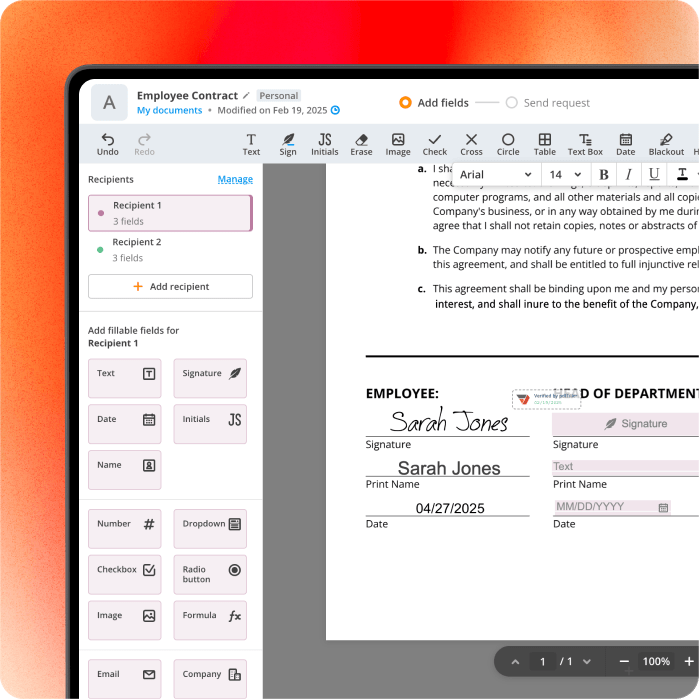
Open the form Click Get Form to open Signature Release Authorization and Indemnification Agreement in the pdfFiller editor to begin customizing your delivery preferences immediately from your web browser.
-
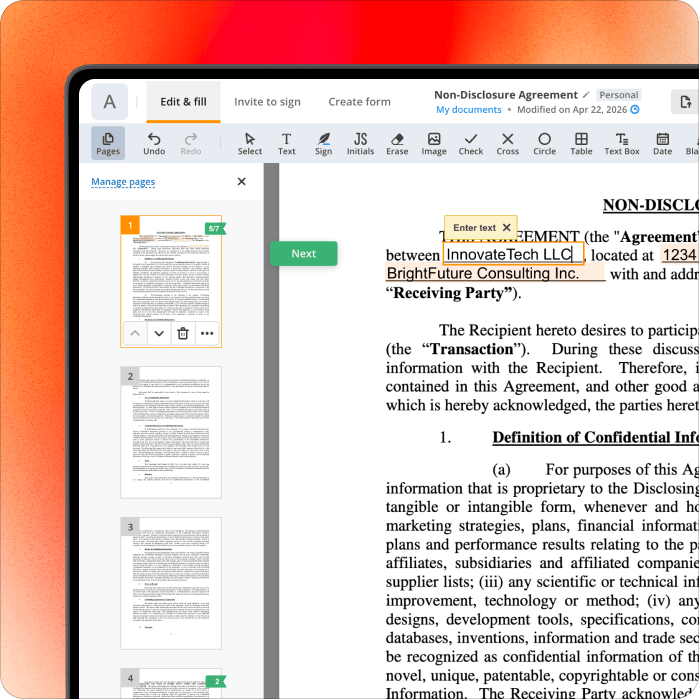
Enter account number Locate the Account Number field and click to type your specific account information directly into the document using the platform's intuitive text tool for precise data entry.
-
Specify delivery location Click on the section for the Secure Location Where Packages Are To Be Left and type the exact spot where you want your shipments placed for package delivery authorization.
-
Fill other details Navigate to the Other Details section and use the editor to select checkboxes or fill in blank fields with any additional instructions required for your specific delivery needs.
-
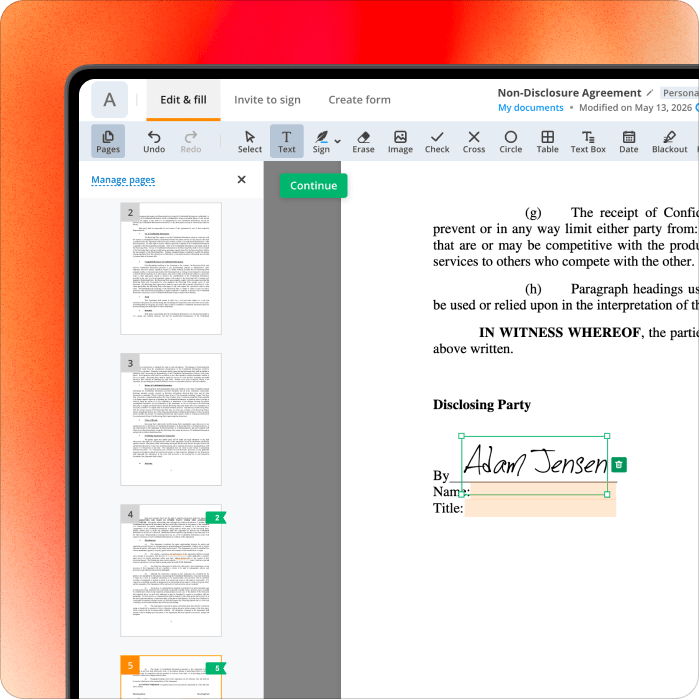
Sign the agreement Select the Recipient Signature field and use the Sign tool to create and apply a legally binding e-signature, which is essential for this recipient signature agreement to proceed.
-
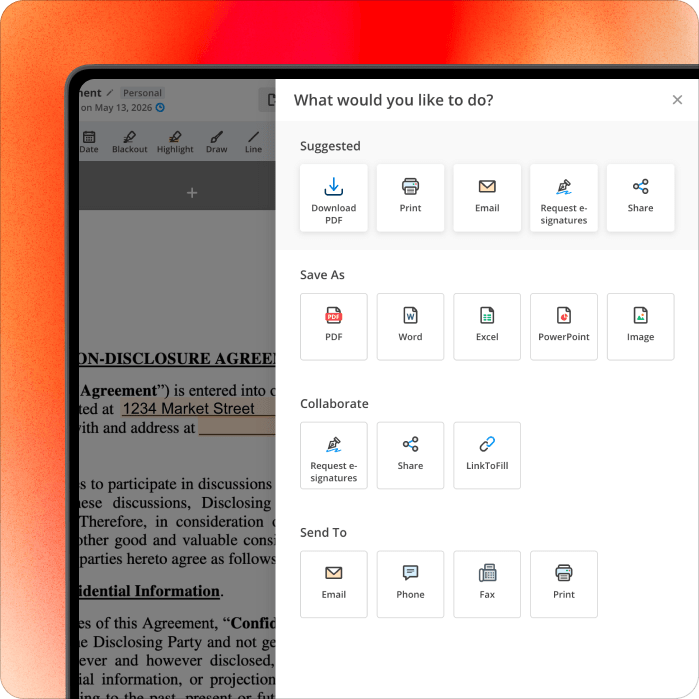
Save and share Review your completed document for accuracy, then save the finished PDF to your secure encrypted storage or share it via email or link directly from the platform.
Related content
The forms, guides, and worksheets most filers reach for alongside FedEx Signature Release Authorization and Indemnification.
Key terms used in FedEx Signature Release Authorization and Indemnification
A one-sentence glossary of the FedEx Signature Release Authorization and Indemnification terms and concepts you'll see throughout this guide.
- Signature Release
- Permission granted to FedEx to deliver packages without obtaining a physical signature from the recipient at the time of delivery.
- Indemnification
- A legal commitment by the recipient to hold FedEx harmless against claims resulting from loss or damage to delivered packages.
- Secure Location
- The designated area specified by the recipient where the delivery driver is authorized to leave packages without a signature.
- Recipient
- The person or business entity that authorizes delivery without a signature and agrees to the terms of the indemnification agreement.
- Station Manager
- The FedEx representative responsible for providing the final written approval required to activate the signature release authorization.
Frequently asked questions about FedEx Signature Release Authorization and Indemnification
Quick answers to the questions we hear most often about completing the FedEx Signature Release Authorization and Indemnification.
The Signature Release Authorization and Indemnification Agreement is a document that allows FedEx to deliver packages to a designated location without obtaining a recipient's signature. By signing this agreement, the recipient authorizes delivery without signature and agrees to indemnify the carrier against claims for loss or damage. It is primarily used by recipients who want to receive packages when they are unavailable.
Both the recipient and a FedEx Station Manager must sign the Signature Release Authorization and Indemnification Agreement to make it valid. The recipient provides their signature to request the service, and the agreement is finalized once the Station Manager grants written approval. This process ensures both parties agree to the terms of the delivery arrangement.
The form requires the recipient's signature, an account number, a description of the secure delivery location, and other specific package details. Recipients must clearly identify where the carrier should leave items to ensure they are placed in a safe spot. Completing all sections accurately helps avoid confusion during the delivery process.
Yes, you can use pdfFiller to fill out, edit, and eSign the Signature Release Authorization and Indemnification Agreement directly from your web browser. The platform offers secure encrypted storage and is compliant with SOC 2 and PCI DSS to protect your account information. You can also share the finished document via email for the Station Manager's review.
The agreement becomes legally binding only after it has been signed by the recipient and received written approval from a FedEx Station Manager. Until this formal approval is granted, the carrier's standard signature requirements remain in effect. Once the Station Manager signs off, the authorization for the specified delivery location is officially recognized by the company.
Indemnifying the carrier means the recipient agrees to protect FedEx against any claims or losses resulting from packages left at a designated location. This provision is a requirement for using the service, as it ensures the recipient accepts responsibility for the items once they are delivered. It is a standard part of these types of carrier agreements.